Lead paint or asbestos at home? Test it first — then get certified pros, free.
If you think your home may have lead paint or asbestos, the safest first step is simple: do not disturb it. Abatewell helps you find licensed, certified local pros for testing and abatement — free to use, in 10 languages.
Situations
What are you dealing with?
Pick your situation for what to do, why you should test before any work, and a free way to find a licensed, certified pro.
Before any work begins
Lead and asbestos work is regulated. These steps protect your family — and they are not optional.
- 1Get it tested first. Don't disturb suspected lead paint or asbestos. Have it tested by a certified inspector or accredited lab before any sanding, scraping, cutting, or demolition — disturbing it is what releases the hazard.
- 2Hire certified, licensed pros. For paint disturbance in older homes, look for EPA Lead RRP certification; for asbestos, look for a state-licensed asbestos abatement contractor. Ask for proof of certification.
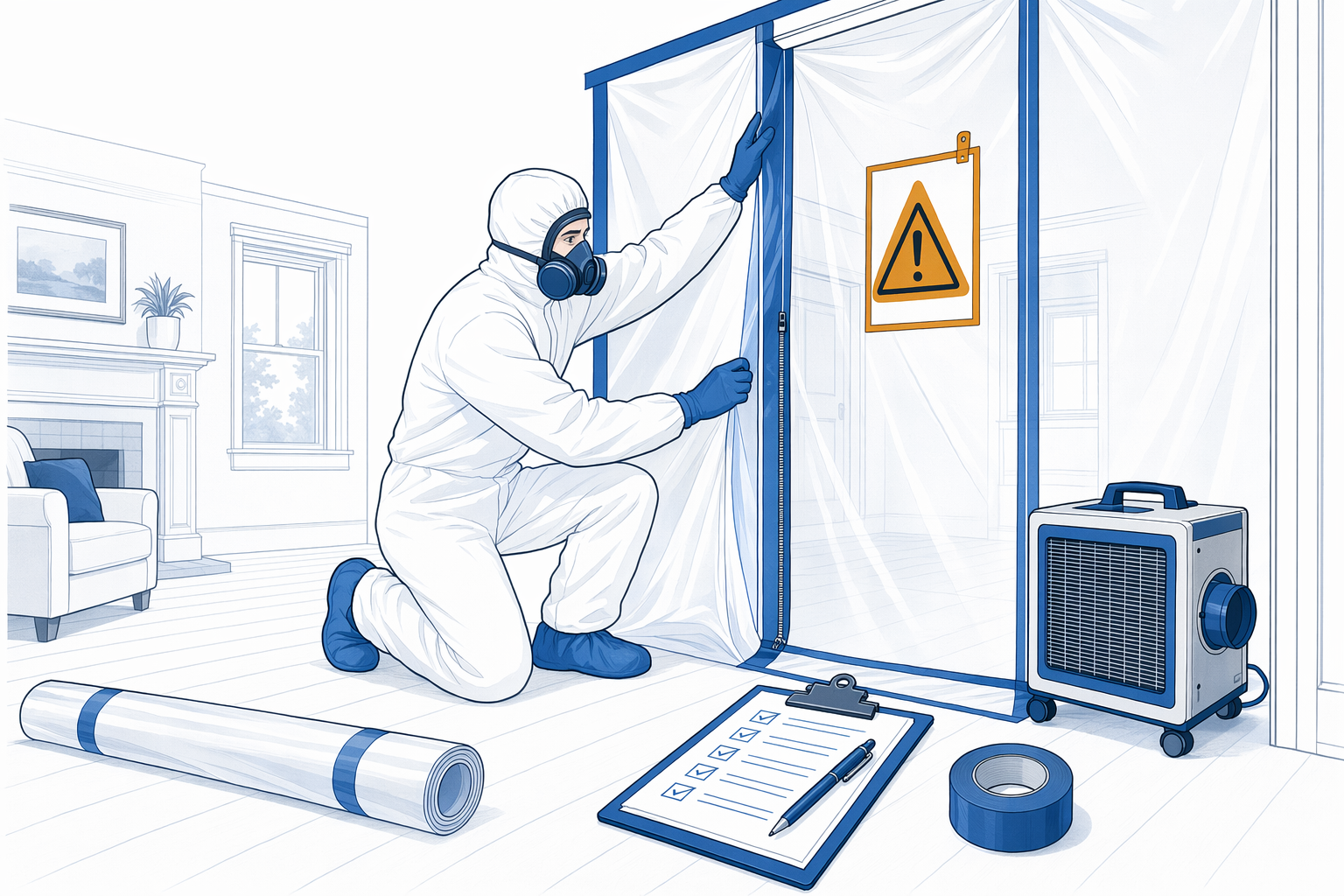
- 3Require containment & disposal. Certified pros seal off the area, use proper protective equipment and HEPA cleanup, and dispose of waste under the rules. Be wary of anyone who skips containment or offers to 'just scrape it off.'
- 4Verify & get it in writing. Verify the license and certification yourself with your state or the EPA, confirm insurance, and get the scope and price in writing before work starts. You compare and choose who to hire.
Free matching
How Abatewell works
Four clear steps — and you stay in control, verify the certification, and choose the whole way.
What you're worried about — lead paint, asbestos, or not sure — the age of the home, and how to reach you. Contact and project details only — never financial records or immigration status.
We connect you, at no cost, with licensed, certified lead and asbestos testing and abatement professionals near you.
Ask each pro for proof of EPA/state certification and insurance, and confirm the scope and price in writing. Verify the license yourself.
You decide who to hire. Confirm the work — testing, containment, removal, clearance — is done properly before you pay the final amount.
Honest pricing
Honest cost ranges
Real numbers depend on the material, how much there is, access, your area, and required testing and disposal. These are typical ranges, not quotes.
Services
Testing and abatement work
The kinds of certified work the licensed professionals we match you with handle.
How certified asbestos inspection and sampling works, accredited lab testing, what it costs, and how to find a licensed inspector before you disturb any suspect material.
Learn more → Asbestos abatement and removalHow licensed asbestos abatement works — containment, negative air, removal, disposal, and clearance testing — what it costs, and how to find a state-licensed abatement contractor.
Learn more → Lead paint inspection and risk assessmentThe difference between a lead inspection and a risk assessment, how certified testing works, what it costs, and how to find an EPA/state-certified lead professional.
Learn more → Lead paint abatement and removalHow certified lead abatement works — safe removal, replacement, enclosure, and clearance — what it costs, and how to find a certified lead abatement contractor for permanent fixes.
Learn more → Encapsulation and enclosureWhen sealing in or enclosing lead paint or asbestos is allowed instead of removal, how it's done by a certified pro, what it costs, and how it differs from full abatement.
Learn more → Clearance and air testing after abatementWhy independent clearance testing matters after lead or asbestos work, what passing means, what it costs, and how to make sure the job was finished safely and legally.
Learn more →What to do right now
If you suspect lead paint or asbestos, do not sand, scrape, drill, cut, break, or remove it yourself. Keep children, pets, and other household members away from the area as much as you can until a qualified professional can assess it.
The next safe step is testing. Lead paint and asbestos usually cannot be confirmed just by looking. A certified professional can inspect the material, collect samples if needed, and send them to an accredited lab.
Abatewell is a free matching and directory service. We do not test, remove, or abate lead paint or asbestos, and we do not provide legal, regulatory, or medical advice. We help you find local professionals so you can compare your options and verify credentials yourself.
Why testing first matters
Lead paint and asbestos can become dangerous when disturbed. In older homes, common trouble spots include painted windows, doors, trim, walls, ceilings, flooring, pipe insulation, textured ceilings, old siding, and some old adhesives or floor tiles.
Lead dust can be especially harmful for young children and pregnant people. Asbestos fibers can be dangerous when released into the air. That is why "test first" is so important before renovation, repair, demolition, or even small prep work.
If you are worried that a child may have been exposed to lead, or anyone may have a health issue related to exposure, contact a doctor or your local health department. This page is general educational information only, not medical advice.
Who should handle lead paint or asbestos work
Lead and asbestos work is heavily regulated. If paint may be disturbed in a pre-1978 home, ask whether the firm follows EPA Lead RRP rules and uses EPA-certified renovators where required. For asbestos, licensing is usually handled at the state level, and removal work often requires specific state licenses, containment procedures, and approved disposal.
A reputable company should be able to explain how they will test, contain the work area, protect occupants, clean up, and dispose of waste properly. They should also tell you what parts of the job require lab testing, permits, or clearance steps, depending on your state and the material.
Always verify a pro's certification, license, and insurance yourself with your state licensing authority or the EPA where applicable. Rules vary by state, city, building type, and material, so confirm the details for your location.
How Abatewell helps
Abatewell is built for people who need clear next steps without pressure. We are a free matching and directory service for homeowners and renters across the United States, especially helpful for new immigrants and non-native English speakers.
You can get matched with local professionals or learn how it works. We only collect basic contact and project-intent details: your name, phone number, optional email, concern type, ZIP code, rough home age, and preferred language. We do not ask for bank account numbers, Social Security numbers, immigration status, or sensitive personal records.
Our role is to help you connect with professionals near you. We are not a contractor, testing laboratory, or law firm, and we do not promise a specific company, price, timeline, or outcome.
What the process usually looks like
- Stop work and avoid disturbing the suspected material.
- Arrange testing or an inspection by a qualified professional.
- Review the findings and ask whether repair, encapsulation, enclosure, or full abatement is recommended.
- Get the scope of work, safety steps, and price in writing.
- Verify license, certification, and insurance yourself before you hire anyone.
- Make sure the plan includes proper containment, cleanup, and disposal.
The exact process depends on what the material is, where it is located, how damaged it is, whether anyone has already disturbed it, and your state or local rules. You can learn more in our hazards guide.
Costs, red flags, and smart questions to ask
Costs vary a lot. Testing may range from roughly a few hundred dollars for a small, limited inspection to more for larger homes, multiple sample locations, or more complex materials. Abatement costs can range from hundreds to many thousands of dollars depending on the material, how much is present, access, labor, containment, disposal, and your area. These are general ranges only, not quotes. For more detail, see costs.
Be careful of red flags. If someone says "we'll just scrape or sand it off," cannot show the right certification or state license, skips containment, wants cash only, uses scare tactics, or pressures you to sign immediately, slow down and verify everything first.
Ask simple questions:
- Are you licensed or certified for this work in my state?
- Will you test first, and will samples go to an accredited lab?
- How will you contain the area and protect my household?
- How will waste be handled and disposed of?
- Can you provide your insurance information and a written scope and price?
If you think you have lead paint or asbestos, do not disturb it—get it tested first and only hire properly licensed or certified professionals you verify yourself.
Suspect lead or asbestos? Get matched with a certified pro
Free for homeowners. Contact and project details only. You compare, verify the EPA/state certification, and choose who to hire — and confirm the scope and price in writing before any work starts.