Hazards
Lead and asbestos — when you're not sure
If your home may have both lead paint and asbestos, the safest first step is simple: do not disturb the material. Keep people and pets away and have it tested by certified professionals before any sanding, cutting, or demolition.
Don't disturb it
Sanding, scraping, cutting, or breaking material that may contain lead or asbestos is what releases the hazard. Leave it alone, keep people and pets away, and get it tested by a certified pro first.
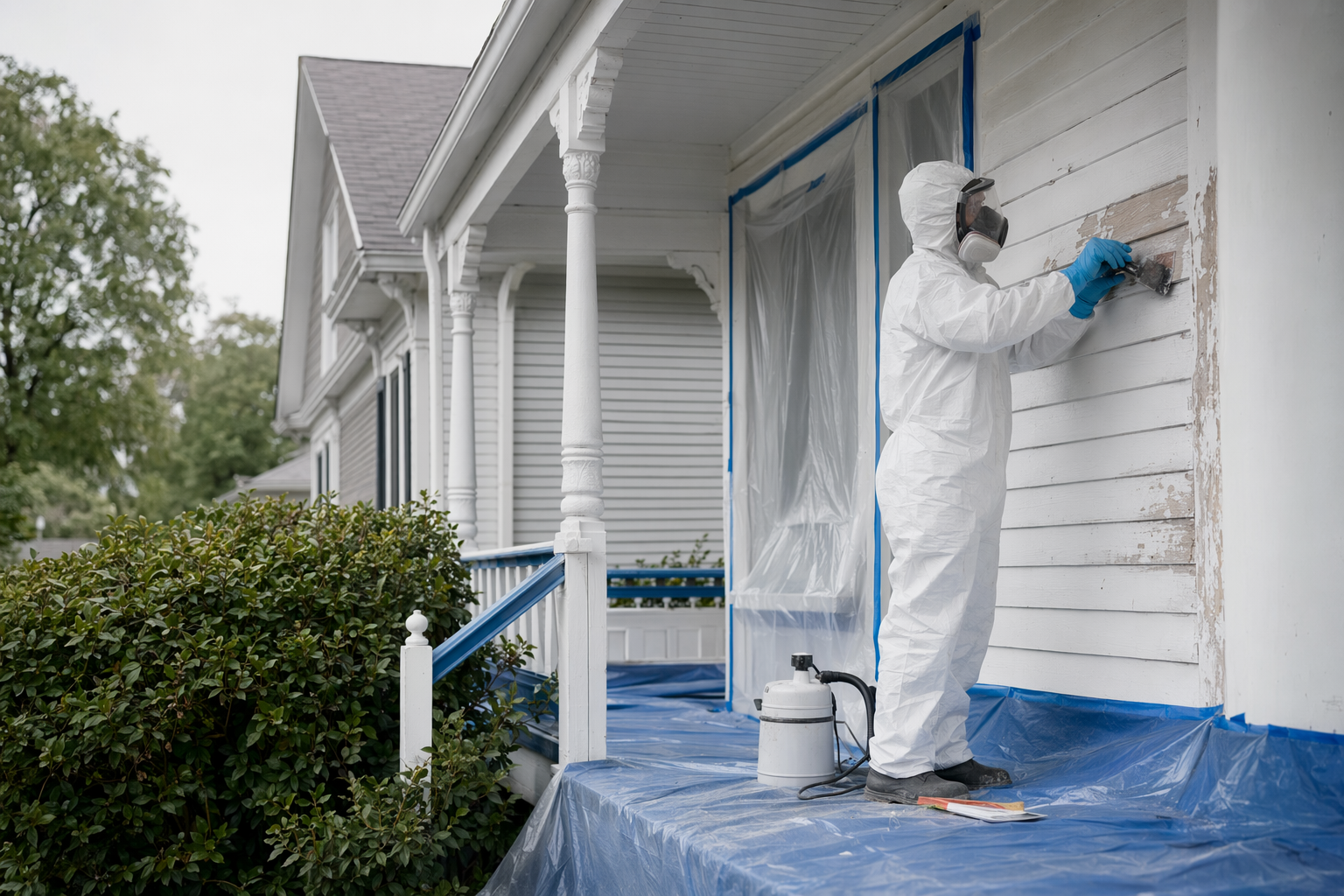
What to do right now
When you are not sure whether a material contains lead, asbestos, or both, treat it carefully until you know. In many older homes, both hazards can be present at the same time, especially before renovation, during repairs, or in a home sale.
- Stop any sanding, scraping, drilling, cutting, or demolition.
- Keep children, pregnant people, and pets away from the area.
- Do not sweep dust or break material apart to "check."
- Arrange testing by a certified professional before any work starts.
Lead dust and asbestos fibers are often too small to see. That is why "just being careful" during DIY work is usually not enough. The safest move is to leave the material alone and get clear test results first.
Abatewell is a free matching and directory service. We do not test, remove, or abate lead paint or asbestos, and we do not give legal, regulatory, or medical advice. We help you find licensed, certified professionals near you so you can decide what to do next.
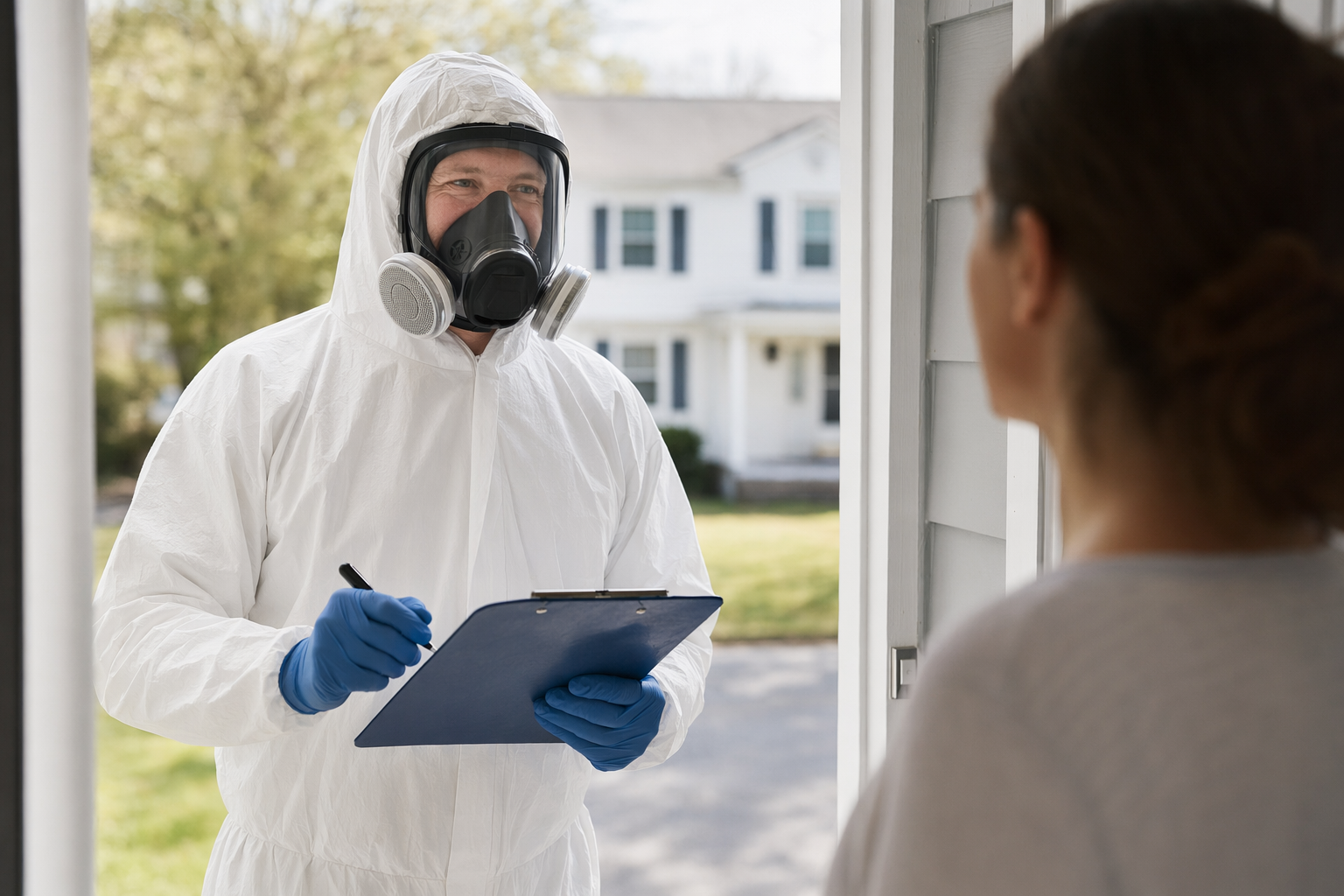
Why both hazards matter in older homes
Homes built before the late 1970s can have lead-based paint on walls, trim, windows, doors, porches, and other painted surfaces. Asbestos may be found in pipe insulation, floor tiles and mastic, popcorn ceilings, some siding and roofing, old heating materials, and other building products.
A home can have one hazard, both, or neither. Age alone is not proof. The risk often rises when material is disturbed during remodeling, repairs, water damage cleanup, or a rushed pre-sale project.
Lead is most dangerous when paint turns into chips or fine dust that people swallow or breathe in. Young children are especially at risk because lead exposure can harm development and behavior even when there are no obvious symptoms.
Asbestos is dangerous when damaged material releases tiny fibers into the air. Breathing those fibers over time can increase the risk of serious lung disease. Intact, undisturbed material may not release fibers, which is one reason testing and a proper plan matter before anyone starts work.
How testing works before renovation or a sale
Testing tells you what is actually there and helps avoid unsafe work. For lead, a certified lead inspector or risk assessor may use an XRF device, paint chip sampling, dust wipe sampling, or other approved methods depending on the situation. For asbestos, a trained inspector typically takes small samples safely and sends them to an accredited laboratory for analysis.
Do not collect samples yourself unless a qualified professional specifically instructs you and local rules allow it. Pulling up flooring, scraping paint, or opening old insulation can spread the very dust or fibers you are trying to avoid.
If you are planning a remodel, ask for testing before the contractor starts. If you are buying or selling a home, testing can help clarify the scope of work, timing, and likely costs. You can learn more about the process in our hazards hub and asbestos testing guide.
A good professional should explain what they are testing, how samples are handled, what lab is used, and when you should expect results. Ask for the results in writing and keep them with your home records.
What the law usually requires
Lead and asbestos work is heavily regulated, and the exact rules depend on your state, your local area, the type of building, and the material involved. This page is general educational information, not legal or regulatory advice.
For lead paint, renovation that disturbs painted surfaces in pre-1978 homes is often covered by the EPA's Lead RRP (Renovation, Repair and Painting) rule. That generally means the firm should be EPA-certified, workers should be trained, and the job should use lead-safe work practices to control dust and protect occupants.
For asbestos, removal and many disturbance activities are commonly regulated at the state level. In many states, asbestos abatement must be done by licensed asbestos professionals using specific containment methods, worker protection, transport rules, and approved disposal procedures. Materials often must be tested by an accredited lab.
Whether the issue is lead, asbestos, or both, do not rely only on a verbal promise. Verify the professional's certification or license and insurance yourself with your state authority or the EPA where applicable. Ask how they will contain the area, prevent spread, and dispose of waste legally.
Typical costs and what changes the price
Costs vary widely, and any range you see online should be treated as a rough guide, not a quote. The real number depends on what the material is, how much there is, how easy it is to access, your location, whether emergency scheduling is needed, and the testing, containment, labor, and disposal required.
For testing, lead paint inspections or targeted sampling may cost a few hundred dollars to over $1,000 depending on the size of the property and the scope. Asbestos inspection and lab sampling can also range from a few hundred dollars into the low thousands for larger or more complex properties.
If abatement is needed, costs can rise significantly. Small, limited jobs may be in the high hundreds or low thousands, while larger projects involving multiple rooms, flooring, insulation, extensive setup, or careful disposal can run several thousand dollars or more. Added containment, air monitoring, and clearance testing can increase the total.
A low price is not always a good sign. If someone says they will "just sand it off," skip containment, or haul debris away without clear disposal paperwork, that is a major red flag. For more detail, see our costs guide.
How to find a licensed, certified professional safely
If you suspect lead paint, asbestos, or both, look for a professional whose credentials match the work being done. Testing, inspection, and abatement may require different licenses or certifications depending on your state and the type of hazard.
- For lead renovation in pre-1978 homes, ask whether the firm is EPA Lead RRP certified.
- For asbestos work, ask what state asbestos license is required for inspection or abatement.
- Ask for proof of insurance, written scope of work, and written pricing.
- Ask how containment, cleanup, and disposal will be handled.
- Verify certification or licensing yourself with your state or EPA source.
Be cautious of scare tactics, pressure to sign right away, cash-only demands, or anyone who says testing is unnecessary. A trustworthy pro should be willing to explain the process calmly and put the scope and price in writing.
Abatewell is free for homeowners and renters. We collect only basic contact and project details such as your name, phone, optional email, concern type, ZIP code, rough home age, and preferred language so we can help you find professionals in your area. You can get matched with licensed, certified pros, but you should still verify credentials yourself before hiring.
If you are not sure whether something in your home has lead, asbestos, or both, do not disturb it—keep people away and get certified testing before any work starts.
Common questions
Can a house have both lead paint and asbestos?
Yes. In older homes, it is common for lead-based paint and asbestos-containing materials to exist in different parts of the property. That is why testing before renovation or demolition is so important.
If the material looks fine, is it still dangerous?
Sometimes the main risk begins when the material is disturbed. Intact material may pose less immediate risk than damaged or crumbling material, but you should still avoid disturbing it and have it evaluated by a certified professional.
Should I test first or just hire one company to remove everything?
Testing usually comes first so you know what is actually present and what rules apply. The right next step depends on the material, the condition, and your state's requirements.
Can I take my own sample to save money?
That is usually not the safest choice. DIY sampling can release lead dust or asbestos fibers, and some materials require professional handling and accredited lab analysis.
What if I think my child was exposed to lead?
Contact your child's doctor or local health department as soon as possible. Abatewell does not provide medical advice, but a medical professional can tell you whether testing or follow-up is needed.
How do I know if a contractor is legitimate?
Ask for their certification or license number, insurance information, and a written scope of work. Then verify the credential yourself with your state authority or the EPA before you sign anything.