Guides
How to hire a certified abatement contractor
Hiring the right lead or asbestos contractor starts with proof: don’t let anyone scrape, sand, or tear into suspected material until you verify the right EPA/state credentials and insurance. Use this checklist to stay safe and avoid “deals.”

What to do right now (before anyone touches anything)
If you suspect lead paint or asbestos, the safest first step is to avoid disturbing it and get it tested by a certified professional before any demolition, sanding, scraping, or cutting.
Keep people away from the area (especially children and anyone who is pregnant), and don’t track dust around your home. If there’s already debris or active damage, consider contacting your local health department or a qualified testing/abatement professional for next steps.
Abatewell is a FREE matching/directory service—not a contractor, lab, or law firm, and we don’t test or remove materials. This guide is general education (not legal, regulatory, or medical advice).
- Don’t disturb suspected lead/asbestos materials
- Keep people away and limit dust spread
- Get it tested/assessed by a certified pro before any work
- Verify licensing/certification + insurance before signing anything
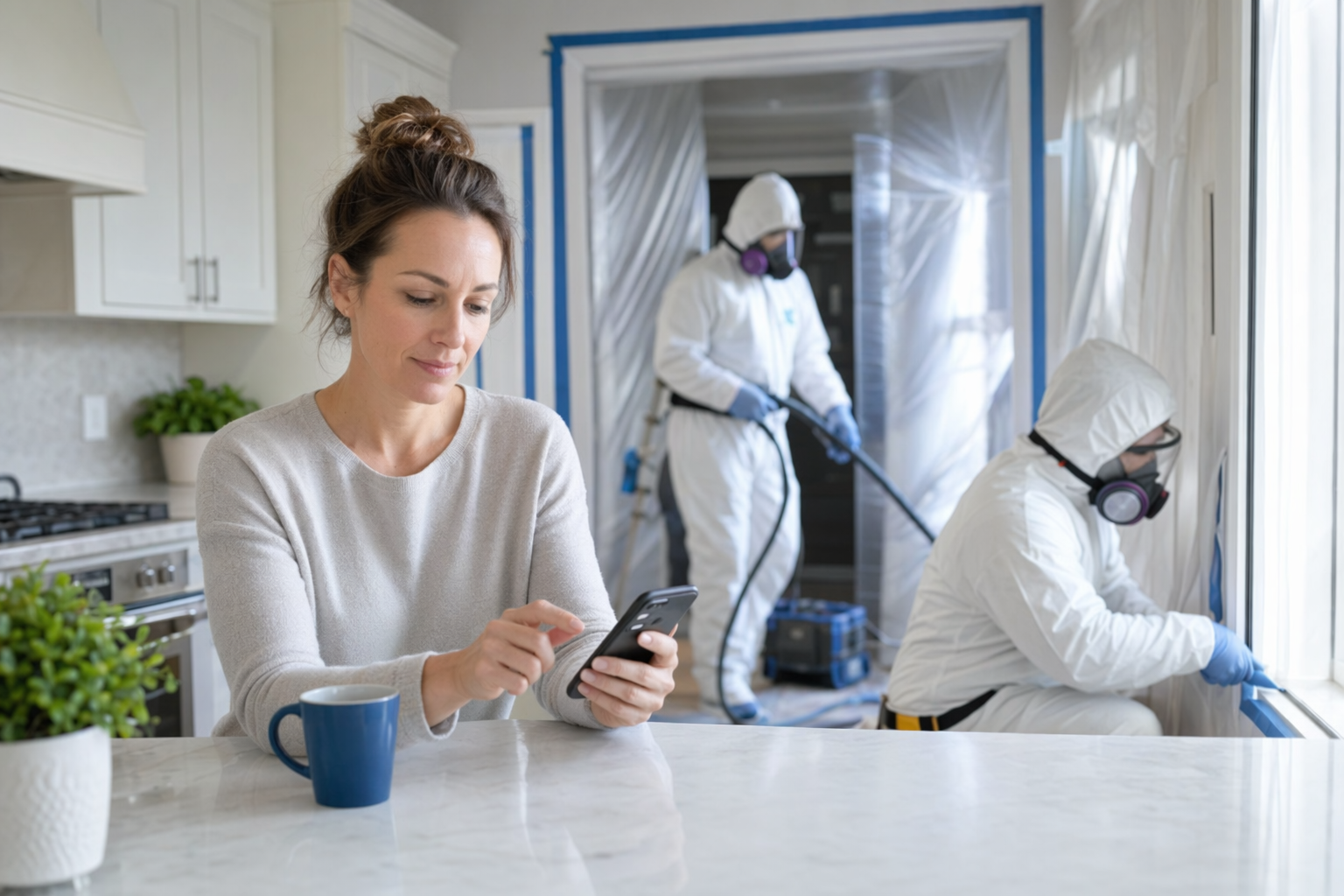
Know the difference: lead RRP vs. state asbestos licensing
For homes built before 1978, work that disturbs painted surfaces may require an EPA Lead RRP (Renovation, Repair and Painting) certification for contractors doing renovations, repairs, or painting. Even if a project seems “small,” disturbing paint can create lead dust—so the credentials matter.
Asbestos is different. Asbestos abatement typically requires state-specific asbestos licensing (and often specific project notifications, training, containment practices, and disposal rules). Don’t assume a general contractor’s license covers asbestos abatement.
Because rules vary by state and locality, always verify the exact license/certification the contractor needs for your scope in your area.
- Ask: “Is this lead work subject to EPA Lead RRP? Who is RRP-certified?”
- Ask: “Is this asbestos work requiring a state abatement license in my state?”
- Confirm they follow containment and proper disposal requirements for the hazard
Verify credentials the right way (don’t rely on promises)
When someone claims they’re certified, ask for proof and verify it yourself. For lead RRP, the company should be able to provide their EPA RRP certification information, and the work should be planned to prevent dust spread (work practices, containment where appropriate, and proper cleanup).
For asbestos, request the state asbestos abatement license for the company (and confirm it matches the job type and location). Licensing status can change—verify it with your state agency or licensing board.
Also confirm insurance before work begins. You want evidence of liability insurance (and sometimes additional coverage depending on the project) so you’re not stuck if there’s property damage or an incident.
- Ask for certificate/ID numbers for lead RRP and state asbestos licensing
- Verify the numbers with the EPA/state lookup (don’t just accept a screenshot)
- Request proof of insurance and confirm coverage limits
- Make sure the contractor can explain, in plain language, how they will control dust and manage disposal
Read the scope like a safety document (what must be in writing)
A good scope of work should clearly describe what will be done, what will not be done, and how safety will be maintained. It should also address containment, cleanup, and how waste will be handled. Vague promises like “we’ll just scrape it off” are a major warning sign for lead and asbestos jobs.
Ask how the work area will be contained (for example, barriers/negative pressure where appropriate), how air or dust will be controlled, and what cleaning and verification steps will occur before people re-enter. If a job includes demolition, ask how they prevent dust migration and manage debris.
Get a written scope and a written price breakdown (ranges aren’t quotes—final costs depend on site conditions). Avoid pressure to sign immediately; take time to review.
- Request a written scope (tasks, boundaries, start/end, and safety steps)
- Ask about containment and dust control methods appropriate to the hazard
- Ask how waste will be collected, packaged, and disposed of properly
- Ask how cleanup/verification will be handled before re-occupying areas
Typical costs (what to expect, and why ranges vary)
Costs vary widely based on the type of hazard, the amount of material, access, the level of containment needed, required testing/clearance steps, and your local disposal fees. Because of those variables, any “number” you hear up front is only a rough estimate.
As a general expectation, lead-related work and asbestos abatement can run from hundreds to tens of thousands of dollars depending on scope (for example: small, contained areas vs. whole-room or whole-home work). Testing and clearance (including lab analysis for samples) can add to the total.
Before you compare offers, make sure each bid addresses the same scope and safety steps. If one “deal” includes fewer containment or cleanup steps, the lower price may reflect higher risk.
For more cost context, see Lead and asbestos costs.
Red flags: how “deals” become unsafe situations
Be cautious if a contractor can’t show proof of the right EPA/state credentials, or if they avoid discussing containment and cleanup. Any attempt to pressure you—“sign today,” “we’ll handle it,” “it’s fine, just scrape”—is not reassuring.
Red flags include cash-only payments, scare tactics, or promises that they can make the hazard “go away” without proper containment, disposal, and cleanup verification. Also avoid anyone who won’t put the scope and price in writing.
If there’s concern about current exposure (for example, a child with possible lead exposure), contact a qualified medical professional and/or your local health department for guidance.
- No license/certification proof (or refusal to verify)
- No containment plan or unclear cleanup/verification steps
- “Just scrape/sand it off” advice without the proper controls
- Cash-only, pressure to sign on the spot, or unclear paperwork
- Scope is vague and not itemized in writing
Verify EPA/state certifications and insurance, demand a detailed written scope with containment and proper cleanup, and never let anyone start work on suspected lead or asbestos until you test first.
Common questions
Do I need an EPA Lead RRP-certified contractor even for a small repair in a pre-1978 home?
Often, yes—if the repair disturbs painted surfaces in a pre-1978 home, EPA Lead RRP requirements may apply. Ask the contractor whether their work is covered, then verify their EPA Lead RRP certification information yourself and confirm they follow appropriate dust control and cleanup practices.
How can I verify a contractor’s asbestos licensing in my state?
Ask for the company’s state asbestos abatement license details and confirmation of the specific license type for the work. Then verify the status using your state licensing/asbestos authority lookup or the relevant state agency website. If they can’t provide verifiable info, don’t proceed.
What should be in the contract or scope for lead or asbestos work?
A clear written scope of work, including the area to be contained, dust control and cleanup steps, waste collection and disposal approach, and any testing/verification steps before re-occupying. Make sure the price matches the same scope—don’t compare offers with different safety steps.
If I’m not sure whether it’s lead or asbestos, what should I do first?
Test first. Don’t start demolition or sanding to “find out,” and don’t disturb suspected materials. Use a certified testing professional for accredited lab analysis, then hire the appropriate certified contractor based on the results.
Is Abatewell a contractor or lab that will test my home?
No. Abatewell is a FREE matching/directory service that helps connect you with licensed, certified testing and abatement professionals near you. We don’t test or remove hazards, and we don’t provide medical or legal advice.