Services
Clearance and air testing after abatement
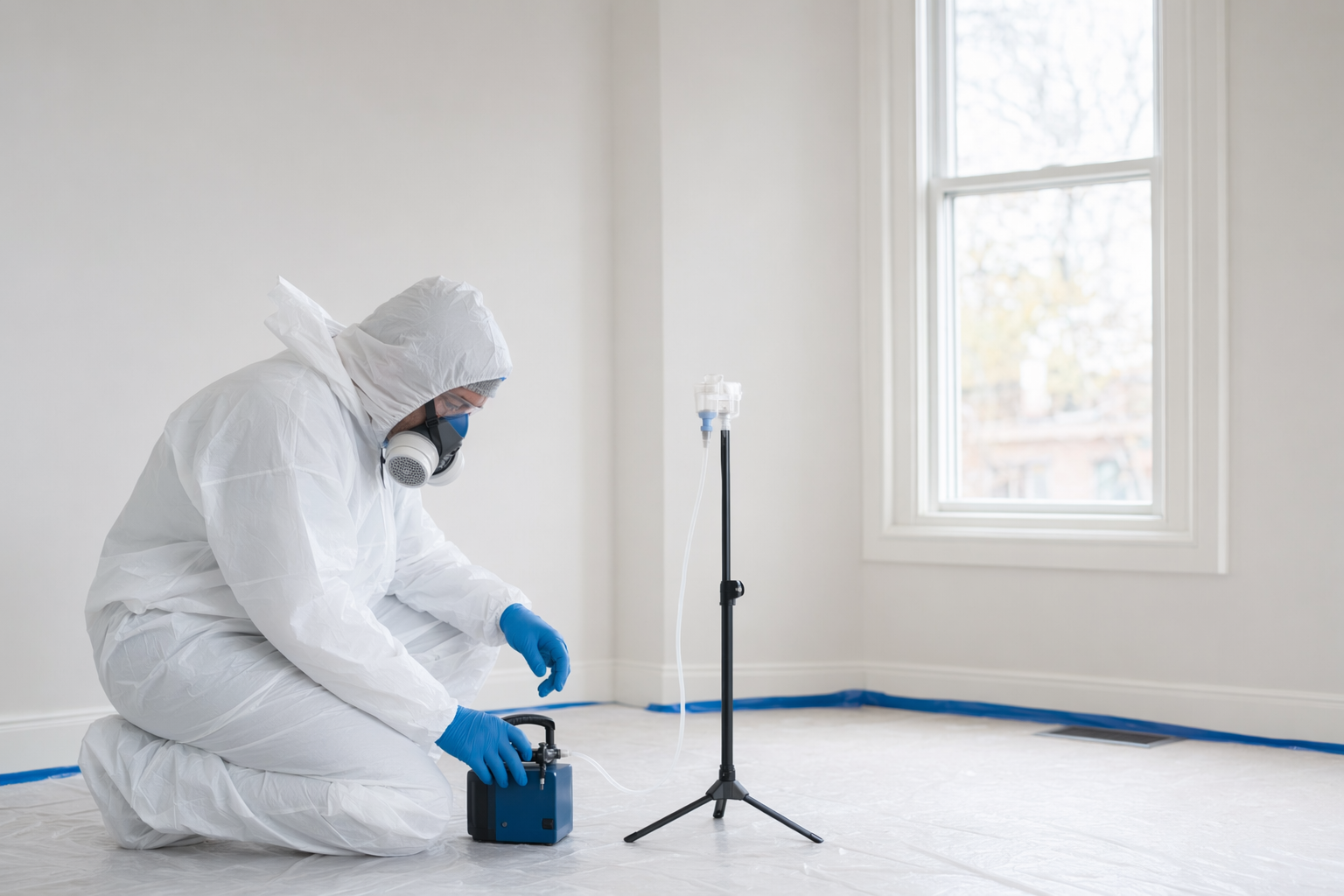
After lead or asbestos work, clearance testing helps confirm the area was cleaned properly before people return. The safest approach is independent testing by a certified professional using proper sampling, lab analysis, and written results.
What to do right now
If abatement or renovation work is still happening, stay out of the work area and keep children, pets, and anyone not involved away. Do not sweep, vacuum, sand, scrape, or remove barriers yourself.
Before you move back into the area, ask whether final cleaning is complete and whether clearance testing or air testing is required or recommended for your project. For suspected lead or asbestos, the safest step is to avoid disturbing material and have testing handled by a certified professional first.
Abatewell is a free matching and directory service. We do not test, remove, or abate lead paint or asbestos, and we do not give legal, medical, or regulatory advice. We help you find professionals to contact through our services and get matched pages.
What clearance and air testing mean
Clearance testing is the final check after lead or asbestos work. Its purpose is to show, through inspection and/or samples sent to an accredited lab, whether the area appears clean enough to be reoccupied under the applicable rules and project conditions.
For lead work, clearance often includes a visual inspection and dust wipe sampling on floors, window sills, and other surfaces. For asbestos work, clearance may include a visual inspection and air sampling after containment is cleaned and before barriers come down, depending on the type of project and state or local rules.
A "pass" generally means the samples met the applicable clearance standard for that job and area at the time of testing. It does not mean the entire home is free of every hazard forever, and it is not a substitute for fixing the source of a problem if more suspect material remains elsewhere.
When possible, many people prefer an independent third party for clearance testing rather than the same company that performed the abatement. That separation can help avoid conflicts of interest and give you a cleaner record for your files.
How certified pros do this work safely
Proper post-abatement testing happens after the actual work area has been contained, cleaned, and prepared according to the hazard involved. For lead, renovation work that disturbs paint in pre-1978 homes generally falls under EPA Lead RRP rules, which require certified firms and trained workers to use lead-safe practices. For asbestos, removal and cleanup are heavily regulated at the state level, and licensing rules vary by state.
A qualified pro typically follows a process like this:
- Confirm the scope of the work and what standard applies.
- Keep containment in place until final cleaning is complete.
- Use protective equipment, wet methods where appropriate, and HEPA-equipped vacuums instead of ordinary household vacuums.
- Perform a detailed visual check for dust, debris, or damaged material.
- Collect dust wipe or air samples using the required method.
- Send samples to an accredited laboratory.
- Provide written results and explain whether the area passed or needs re-cleaning and re-testing.
Proper disposal matters too. Lead-contaminated debris and asbestos waste must be handled, contained, labeled, transported, and disposed of according to applicable rules. A major red flag is any company that wants to skip containment, skip HEPA cleaning, or tear down barriers before clearance steps are complete.
What it may cost
Clearance and air testing costs vary a lot by hazard, number of rooms or containment areas, how many samples are needed, local lab fees, urgency, and your state or city rules. These ranges are general educational estimates only, not quotes.
For smaller lead projects, post-work visual clearance and dust wipe testing may sometimes run roughly a few hundred dollars, often around $250 to $700, but larger homes, multiple rooms, or repeat visits can push costs higher. For asbestos projects, final visual clearance and air sampling may also start in the few-hundred-dollar range, often around $300 to $1,000+, with larger containments, more samples, rush turnaround, or stricter local requirements increasing the total.
If the area does not pass, there may be added costs for re-cleaning, more lab samples, and another site visit. Ask whether the estimate includes travel, sample collection, laboratory analysis, written reporting, and any return testing if needed.
You can read more general pricing guidance on our costs page, but the real number depends on the material, how much work was done, access, your area, and required testing and disposal.
What to watch for and what to ask
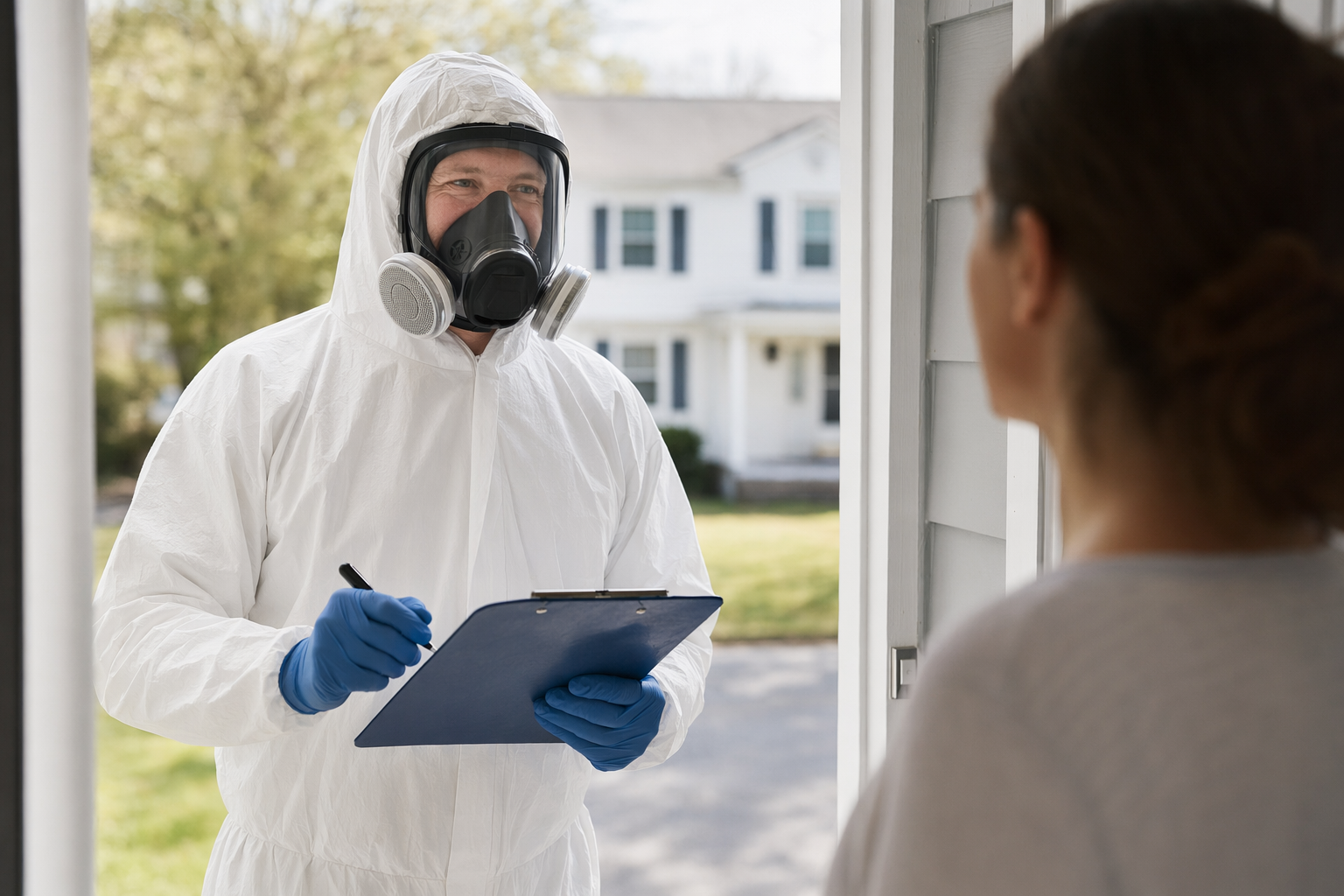
Clearance testing is only useful if it is done correctly. Ask who is performing the final inspection and sampling, what credentials they hold, what lab they use, and whether the lab is accredited for that testing.
Watch for red flags:
- No license, certification, or proof of insurance
- "We don't need containment" or "We'll just clean it quickly"
- "We'll just scrape or sand it off" for lead hazards
- Pressure to reoccupy before results are back
- Cash-only pricing or refusal to give a written scope
- No lab report, no chain of custody, or no written final results
- Scare tactics or pressure to sign immediately
Good questions to ask:
- Is the company certified for this kind of lead or asbestos work?
- Is the person doing clearance independent from the abatement crew?
- What samples will be taken, and where?
- Which accredited lab will analyze them?
- Will I receive written results and a final report?
- If the area fails, who pays for re-cleaning and re-testing?
- When can containment come down and when is re-entry allowed?
How to verify and find a certified pro
Do not rely only on a website, ad, or verbal promise. Verify credentials yourself. For lead work in pre-1978 homes, ask whether the firm is EPA Lead RRP certified when renovation disturbs painted surfaces, and confirm what role they are serving in testing or clearance. For asbestos work, check your state's licensing or certification system for the company and any required supervisor, inspector, or project monitor credentials.
Also verify insurance, ask for the exact company name used on the license, and confirm the scope matches your job. Rules vary by state and locality, so ask your state or local authority what is required for your project, especially for asbestos air clearance and lead clearance after abatement.
If you need help finding companies to call, Abatewell is a free matching and directory service for homeowners and renters. We only collect basic contact and project-intent details such as name, phone, optional email, concern type, ZIP code, rough home age, and preferred language. Start with get matched, browse services, or learn more about common hazards.
After lead or asbestos work, do not re-enter until a qualified professional has done proper final cleaning and independent clearance testing when required or recommended.
Common questions
Do I need clearance testing after lead or asbestos work?
Often yes, but the exact requirement depends on the hazard, the type of work, and your state or local rules. Even when not strictly required, independent clearance testing is often a smart way to confirm the area was cleaned properly before re-entry.
Can the same company do the abatement and the clearance test?
Sometimes rules allow it, and sometimes separate roles are required or strongly preferred. Many homeowners choose an independent third party for clearance because it reduces conflict of interest and gives a clearer final record.
What does a passing result mean?
It generally means the tested area met the applicable clearance standard at the time samples were taken. It does not guarantee that every part of the property is hazard-free or that no other suspect material exists elsewhere.
How long do lab results take?
It depends on the sample type, lab workload, and whether you pay for rush processing. Ask before booking so you know when reoccupancy decisions can realistically be made.
Can I clean the area myself before clearance testing?
It is safer not to disturb a lead or asbestos work area yourself. Cleaning should follow hazard-specific procedures using proper containment and HEPA methods, so ask the certified professional what is appropriate.
What if a child may have been exposed to lead dust?
Contact a doctor or your local health department promptly for guidance. Abatewell does not provide medical advice, but possible lead exposure in a child should be taken seriously.