Abatewell
What lead and asbestos work costs
Costs for lead and asbestos work can vary a lot. These are honest, general ranges to help you plan — not quotes — and the safest first step is still: do not disturb suspected material; get it tested first.
What to do before you think about price
If you suspect lead paint or asbestos, do not sand, scrape, cut, drill, or tear it out to “see what’s there.” Disturbing the material can spread dangerous dust or fibers and make the job bigger and more expensive.
Keep children, pets, and other people away from the area as much as you can. If there is a health concern — especially a possible lead exposure in a child — contact a doctor or your local health department.
Abatewell is a free matching and directory service. We do not test, inspect, remove, or abate lead paint or asbestos, and we do not give legal, regulatory, or medical advice. We help you find licensed or certified local professionals to contact through get matched.
Typical cost ranges people ask about
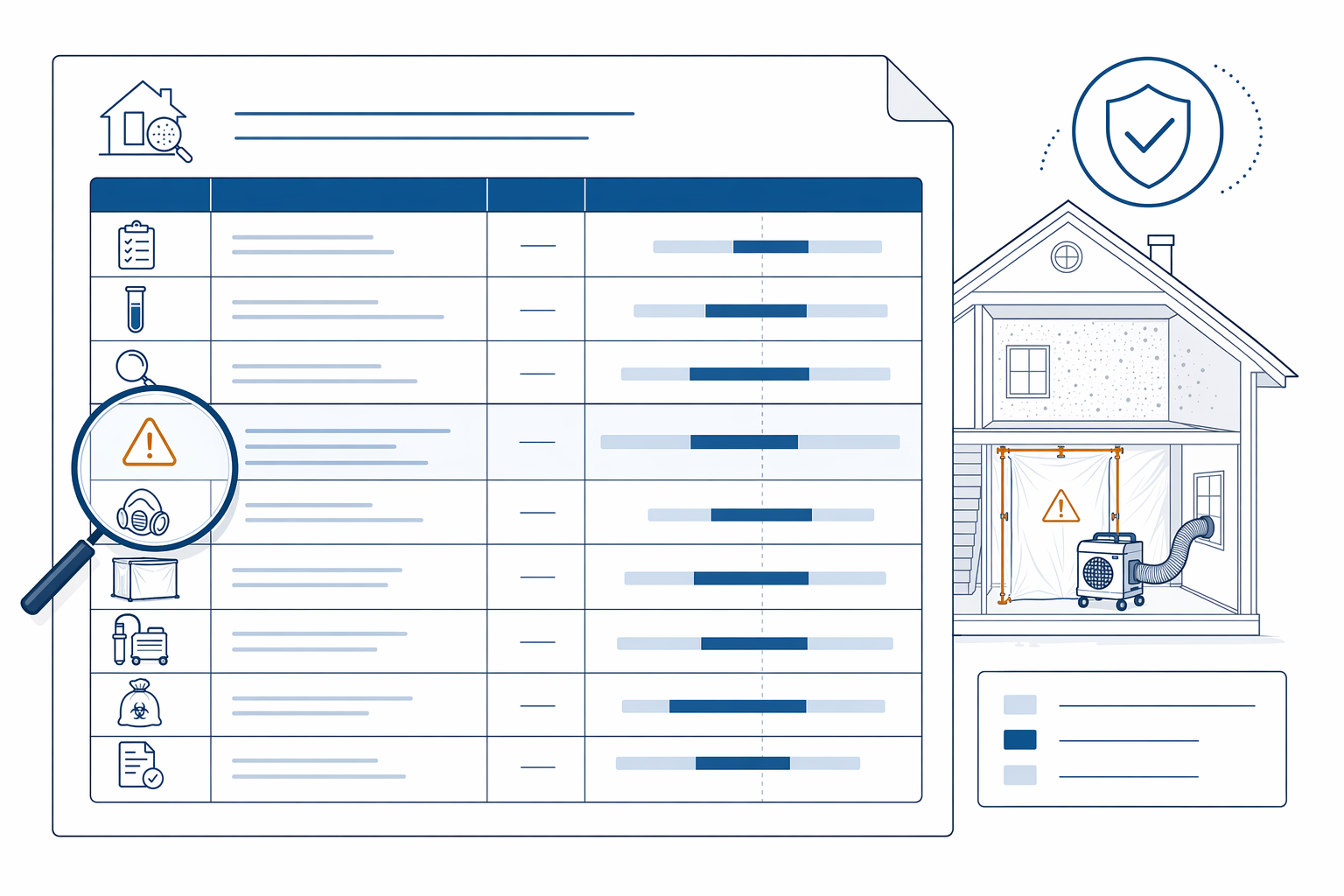
Prices depend on what the material is, how much there is, how easy it is to reach, your location, what testing is required, and the rules for containment and disposal where you live. These are broad educational ranges only — not quotes, and not a promise that your project will fall inside them.
- Asbestos bulk sample testing: often about $25-$100+ per sample, plus possible site visit or inspection fees
- Asbestos inspection or survey: often about $250-$800+ for smaller homes, and more for larger or more complex properties
- Lead paint inspection or risk assessment: often about $300-$900+ depending on home size, number of surfaces, and the type of report
- Lead dust wipe or clearance testing: often about $150-$500+ depending on the number of samples and rooms
- Small, limited asbestos removal jobs: often about $1,000-$3,000+
- Larger asbestos abatement projects: often about $3,000-$15,000+, and sometimes much more for extensive contamination or hard-to-reach materials
- Lead paint abatement for a room or limited area: often about $1,000-$5,000+
- Larger lead paint abatement projects for multiple rooms or whole-home work: often about $5,000-$20,000+, sometimes more
- Encapsulation or enclosure may cost less than full removal in some cases, but it is not right for every material or situation
- Disposal, air monitoring, repairs after removal, and clearance testing may be separate charges
If you want more detail on asbestos pricing, see our asbestos removal cost guide.
What makes the price go up or down
The biggest cost drivers are usually the material itself, how much of it there is, and whether it has been damaged or disturbed already. A few damaged pipe wraps in a tight crawlspace can cost more than a larger, easier-to-reach job because the work is slower and needs stricter containment.
For asbestos, prices often change based on whether the material is friable, where it is located, how much containment is needed, whether negative air machines or air monitoring are required, and how far the waste must be transported for proper disposal. State licensing rules also matter.
For lead paint, costs often change based on the number of windows, doors, trim areas, or painted surfaces involved; whether the paint is peeling; whether occupants can stay in the home; and what method is allowed or recommended. In pre-1978 homes, disturbing painted surfaces during renovation generally triggers EPA Lead RRP requirements, which means the work must follow lead-safe rules and should be done by properly certified firms.
Your local labor costs, permit requirements, and post-work repairs also affect the total. A low price is not always a good sign if it leaves out containment, cleanup, testing, or disposal.
Testing, containment, and disposal are part of the real cost
People sometimes compare one price to another without noticing that one company included testing, containment, cleaning, disposal, and final clearance, while another did not. That can make a “cheap” estimate look better than it really is.
For asbestos, proper work may involve an inspection, accredited laboratory testing, a written scope, sealed containment, protective equipment, specialized cleanup, legal transport, and disposal at an approved facility. In many states, asbestos abatement must be done by a state-licensed contractor.
For lead paint, the right path may include inspection or risk assessment, lead-safe containment, specialized cleaning, dust clearance testing, and repairs after the hazard is addressed. Renovation work in pre-1978 homes that disturbs paint should follow EPA Lead RRP rules.
Ask whether the price includes testing, setup, containment, cleanup, disposal, repairs, and any final clearance or re-occupancy testing. Get the scope and total price in writing.
How to compare estimates safely
Do not choose based on price alone. Lead and asbestos work is heavily regulated for a reason, and cutting corners can put your family at risk and create bigger costs later.
- Ask what exactly is included: testing, containment, labor, disposal, repairs, and clearance.
- Ask for the company’s certification or license numbers.
- Verify them yourself with your state agency, and for lead-related renovation work ask about EPA Lead RRP firm certification if the home was built before 1978.
- Ask whether they carry insurance.
- Ask what accredited lab they use for testing, if testing is part of the job.
- Ask how they will contain the area and keep dust or fibers from spreading.
- Get the scope, timeline, and price in writing.
Red flags include no license or certification, no containment plan, “we’ll just scrape or sand it off,” cash-only payment demands, scare tactics, or pressure to sign right away. If you want help finding professionals to contact, Abatewell can help you get matched for free.
How Abatewell helps
Abatewell is a free matching and directory service for people looking for licensed or certified lead and asbestos professionals. We are not a contractor, testing laboratory, or law firm, and we do not perform testing, removal, or abatement ourselves.
When you use Abatewell, we collect basic contact and project-intent details only, such as your name, phone number, optional email, concern type, ZIP code, rough home age, and preferred language. We do not ask for financial account numbers, Social Security numbers, immigration status, or sensitive personal records.
You can learn more about common hazards at Hazards or use get matched to find local companies to contact. Always verify any pro’s certification, license, and insurance yourself before hiring.
Testing and abatement costs vary a lot, but the safe first step is simple: do not disturb suspected lead paint or asbestos, and get a properly certified professional to evaluate it.
Common questions
How much does asbestos testing usually cost?
Small asbestos sample testing is often around $25-$100+ per sample, but a site visit, inspection, or survey can add a few hundred dollars or more. The real cost depends on how many materials need sampling and whether a full inspection is needed.
How much does lead paint inspection cost?
Lead paint inspections or risk assessments often start around $300-$900+ and can be higher for larger homes or more detailed reports. Dust wipe or clearance testing may be a separate charge.
Is encapsulation cheaper than removal?
Sometimes, yes. But encapsulation or enclosure is not appropriate for every material or condition, so a certified professional should advise you after inspection or testing.
Why are some estimates so much lower than others?
Low estimates may leave out testing, containment, disposal, repairs, or final clearance. They can also be a sign that the company is not properly licensed or is not following lead-safe or asbestos rules.
Can I remove suspected lead paint or asbestos myself to save money?
The safest advice is no: do not disturb suspected material yourself. Lead and asbestos work is heavily regulated, and disturbing it can spread hazardous dust or fibers.
Does Abatewell charge homeowners for matching?
No. Abatewell is free for homeowners and renters using the service to find professionals to contact.
Worried about lead paint or asbestos?
Don't disturb it — get it tested first. Then get matched, free, with a licensed, certified abatement pro near you. You compare, verify the certification, and choose who to hire.