Guides
Avoiding lead and asbestos abatement scams
If someone offers to “remove” suspected lead paint or asbestos quickly, for cash, or without proof of licensing and containment, be careful. This guide shows common scam red flags and how to verify credentials before any work starts.
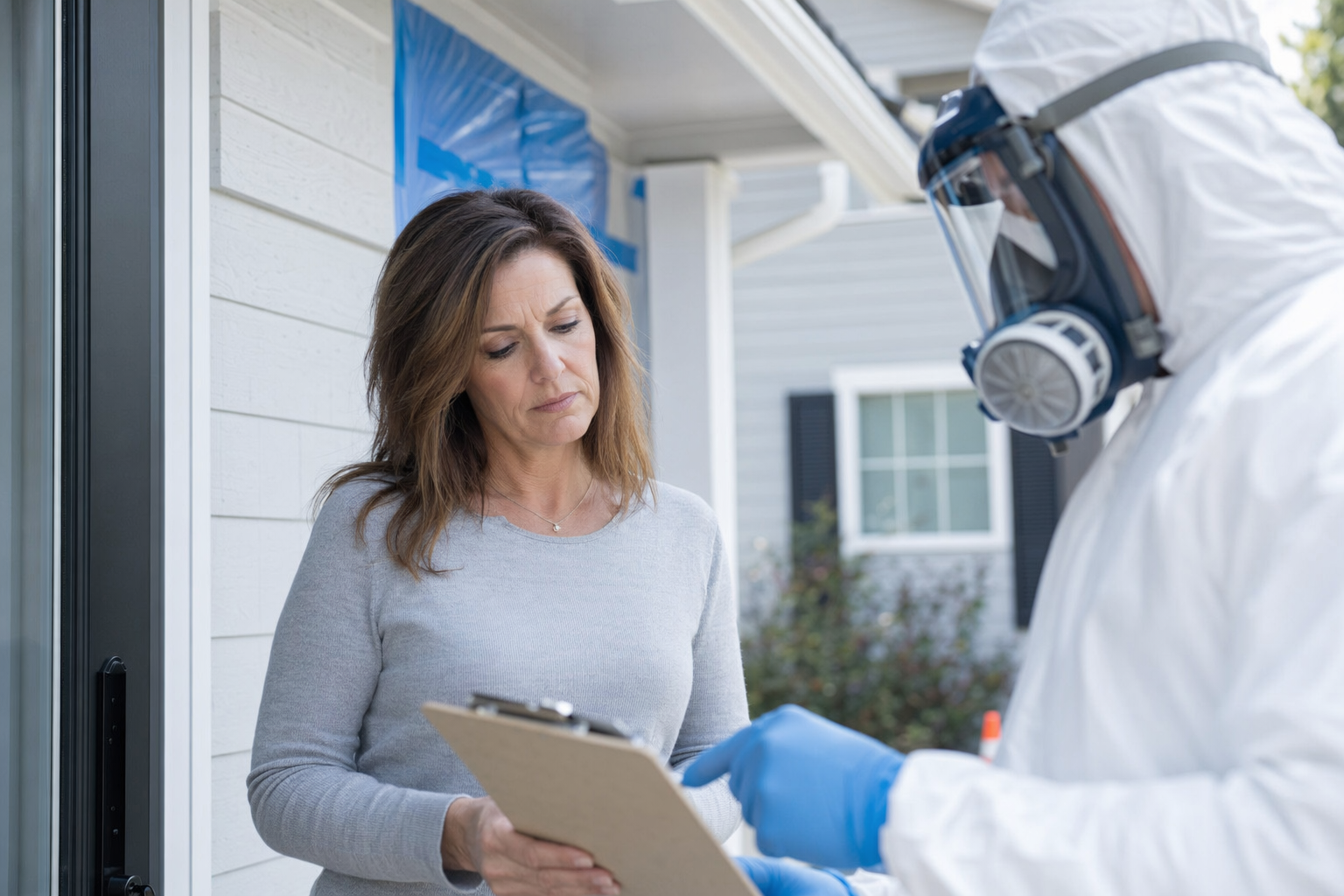
What to do right now (before you let anyone touch it)
If you suspect lead or asbestos in your home, the safest first step is usually: do NOT disturb the material. Avoid sanding, scraping, cutting, sweeping, or demolition—those actions can spread hazardous dust.
Keep people away from the area, especially children and anyone who could be more vulnerable. Close doors, limit traffic, and if there’s active damage (like crumbling material), consider contacting your local health department for guidance on immediate safety steps.
Next, get it tested by a licensed/certified professional before choosing any abatement. Abatewell is a FREE service that can help you find appropriate, verified professionals near you—no testing or removal is done through Abatewell.
- Stop DIY “scrape it off” or “just sand it” plans
- Keep the area isolated and reduce air movement to other rooms
- Contact a certified lead testing/inspection or asbestos testing pro first
- Ask for documentation and confirm licensing/certification before signing anything
- If you’re worried about possible lead exposure for a child, contact a doctor and/or your local health department right away.
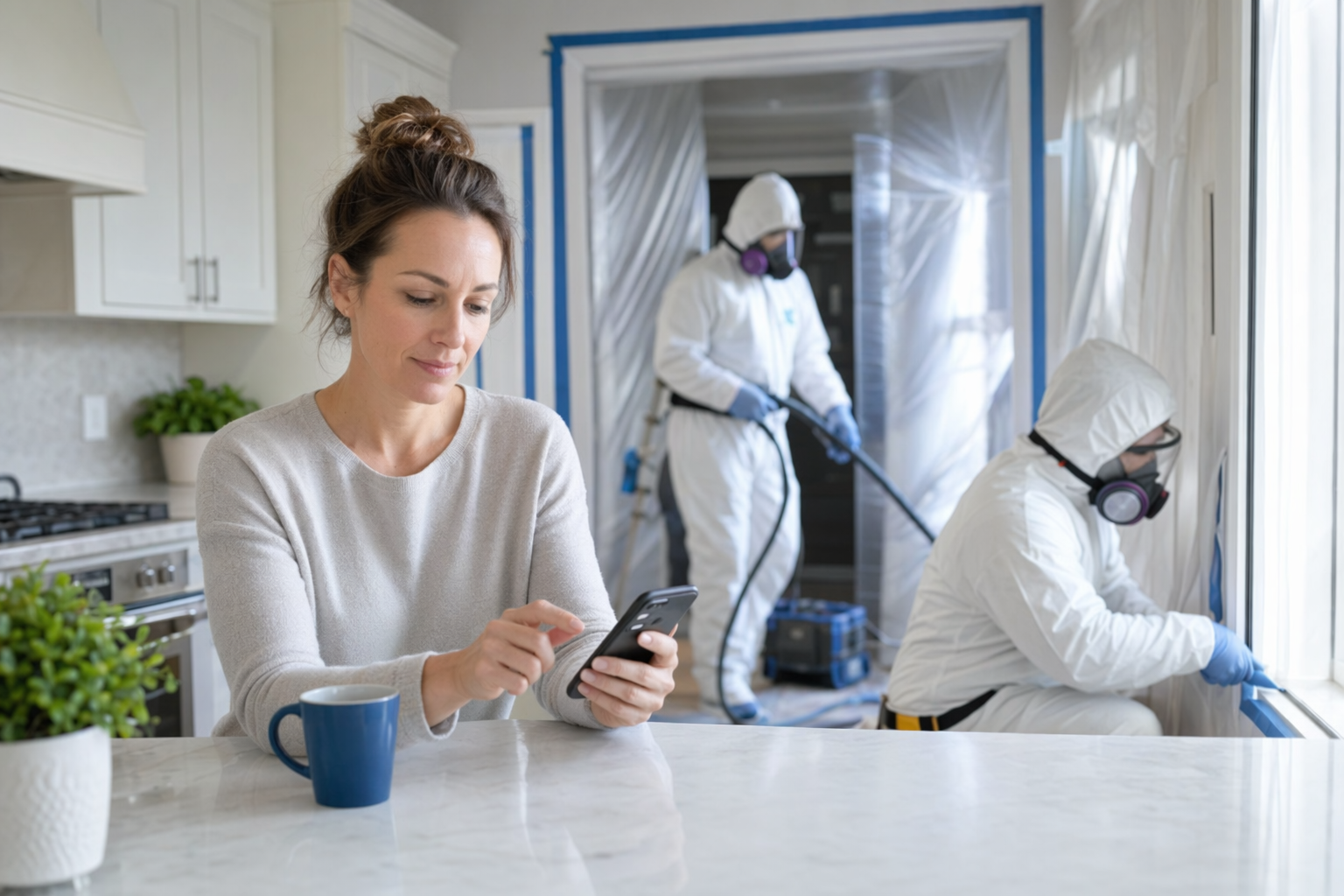
Common abatement scam red flags (lead and asbestos)
Scams often start with urgency, pressure, or fear—then offer vague promises instead of proper safety. A legitimate, regulated process is typically methodical: assessment/testing first, written scope, proper containment, trained staff, and correct disposal.
Watch for these red flags:
- “No need to test—trust us, it’s lead/asbestos”
- “We’ll just scrape/sand it” without containment and without licensed practices
- Cash-only, no invoice, or refusing to put terms in writing
- No visible proof of certification/licensing/insurance
- Pressure to sign on the spot or “you must do it today” threats
- Claims like “we guarantee you’ll never have any risk again” or similar unrealistic outcomes
For asbestos work in particular, containment and proper disposal matter a lot. If someone can’t explain how they will isolate the work area, control dust, and handle waste, treat that as a serious warning sign.
For lead in pre-1978 homes, disturbing painted surfaces is usually tied to EPA Lead RRP (Renovation, Repair and Painting) requirements and/or other state rules. If a contractor can’t show the right EPA RRP certification (when applicable) or does not follow required lead-safe practices, don’t move forward.
- A “low price” that skips testing, containment, and proper disposal is often not a bargain—it’s a hazard.
How verification works: EPA Lead RRP and state asbestos licensing
Abatement and related work is heavily regulated, and the exact requirements vary by state and locality. The safest approach is to verify credentials yourself before any work begins.
Lead (EPA Lead RRP): If the home is pre-1978 and the work involves disturbing painted surfaces, EPA Lead RRP (Renovation, Repair and Painting) certification is commonly required for many renovation activities. Ask the contractor:
- Are you EPA Lead RRP certified (and for the correct firm/people performing the work)?
- Can you provide your certification number and proof it covers the scope?
- Do your work practices include lead-safe containment and clean-up/verification steps?
Asbestos (state licensing): Asbestos abatement typically requires state-specific licensing and strict procedures (like containment, waste handling, and sometimes clearance testing). Ask the asbestos contractor:
- What state license number do you hold for asbestos abatement?
- Do you have the required training and insurance?
- How will you contain the work area and manage waste for proper disposal?
If a person or company won’t provide their certification/license details (or can’t clearly explain how they comply), that’s another major red flag. If anything is unclear, pause and ask follow-up questions—your family’s safety depends on it.
- Ask for the exact license/certification numbers and who is covered
- Verify them using your state agency resources and/or EPA Lead RRP verification
- Confirm they are insured and can explain their containment and disposal approach
- Only proceed after you understand the written scope and safety steps
- Abatewell can help you find pros, but you should still verify their credentials with the appropriate EPA/state systems.
What to ask for (so you don’t get stuck with an unsafe or incomplete job)
Legitimate pros should be able to explain the process clearly and provide paperwork before work starts. If they’re vague, dismissive, or refuse to put details in writing, don’t sign.
Ask for:
- A written scope of work (what areas, what materials, what exactly they will do)
- How they will set up containment (for dust control) and prevent spread
- What cleaning and verification steps they will perform
- How waste will be collected, labeled, transported, and disposed of correctly
- Who will be on-site and their qualifications
- A written price range or estimate based on the scope (final numbers depend on findings)
Also ask about testing and timing:
- Will they base decisions on accredited lab results (for asbestos) or certified lead testing/inspection?
- If they find more than expected, what is the change-order process?
- Will they communicate results clearly, in writing?
Cost expectations (honest ranges, not quotes): Lead and asbestos work can vary widely depending on the amount of material, accessibility, the need for additional sampling/testing, containment size, and disposal requirements. Roughly, you may see ranges from a few thousand dollars for small, contained jobs up to much more for larger removals—especially asbestos. Any “too-good-to-be-true” price that doesn’t match the safety steps is a warning sign.
- Demand a written scope and safety plan before agreeing
- Confirm testing is done by a certified/licensed professional when needed
- Make sure containment and disposal are explicitly included
- Get pricing linked to the scope (ranges are normal; guarantees are not)
- Avoid signing anything if you feel pressured. Take time to verify credentials and compare options.
How Abatewell can help (FREE) without risking your safety
Abatewell is a FREE multilingual matching/directory service. We help people across the United States—especially new immigrants and non-native English speakers—find licensed, certified lead and asbestos testing and abatement professionals near them.
Important: Abatewell does not test for lead or asbestos, does not remove or abate hazards, and does not provide legal, regulatory, or medical advice. We also do not represent a law firm or testing lab.
What you share when you contact Abatewell:
- Your contact information and your project intent
- Your concern type (lead and/or asbestos suspicion)
- Your ZIP code and rough home age (if known)
- Your preferred language
We never ask for sensitive information like immigration status, SSNs, or financial account details.
If you suspect a hazard, the safest path is still the same: don’t disturb it, keep people away, and test first. Use Abatewell to find appropriate pros—then verify their EPA/state credentials yourself before work begins.
- Tell us your ZIP and the type of concern
- Choose a professional from the matched list
- Verify the right certifications/licenses directly
- Request a written scope and safety plan before any work
- If there’s immediate exposure risk (for example, a child may have been exposed), seek medical advice and contact your local health department.
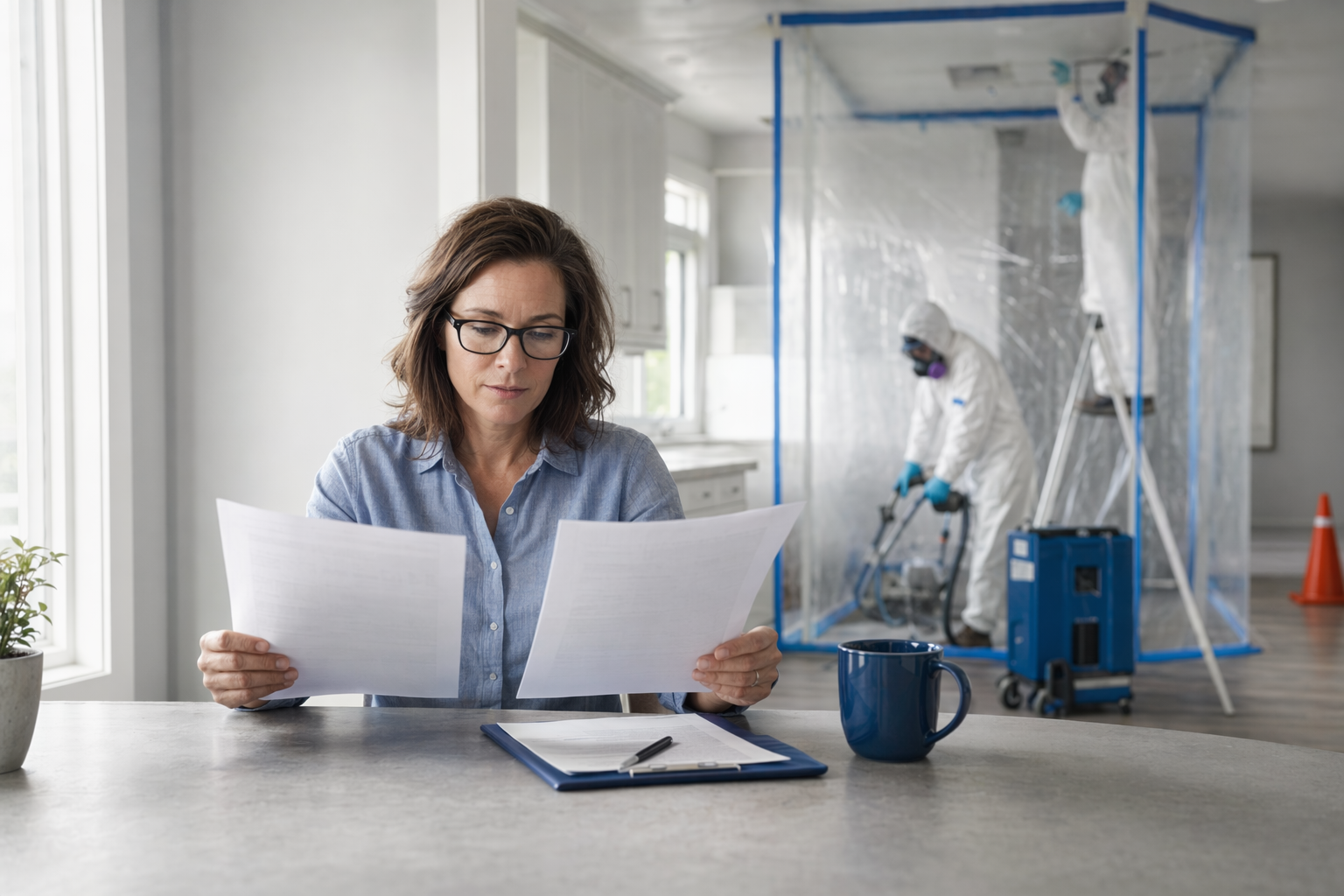
Don’t disturb suspected lead or asbestos, get it tested by a certified pro, and avoid anyone who can’t prove the right EPA/state credentials, containment, and proper disposal in writing.
Common questions
How can I tell if a company is a scam right away?
If they won’t show you the correct EPA Lead RRP certification (when applicable) or the state asbestos license, that’s a major warning sign. Also be cautious if they push you to sign quickly, offer cash-only pricing, refuse written scopes, or talk like they’ll “just scrape it” without containment and proper disposal.
Do I need testing before abatement?
In most situations, yes—especially when you’re not 100% sure what’s present. Testing by a licensed/certified professional helps you confirm whether lead or asbestos is actually involved so you can choose the right, regulated approach. Never disturb suspected material before testing.
What should lead abatement/renovation professionals provide in writing?
You should be able to get a written scope of work tied to the areas/materials involved, a description of containment and dust control, cleaning/verification steps, and disposal/waste handling details. Pricing can be a range, but it should still match the scope, and the safety steps should be included.
Can I verify EPA Lead RRP and state asbestos licenses myself?
Yes. Ask the company for their certification/license number and the people/firms covered, then verify using EPA resources (for Lead RRP when applicable) and your state’s licensing/agency website for asbestos. A legitimate provider will not be bothered by verification.
What does proper containment and disposal mean for asbestos?
It generally means isolating the work area to control dust, using the right procedures to prevent contamination spread, and disposing of waste according to required rules. If a contractor can’t clearly explain their containment and waste handling steps, consider it a serious red flag.