Quick answers
How do I know if my home has asbestos?
If you suspect asbestos, the safest move is to not disturb anything and to get it tested by a certified professional. Abatewell is a free way to find licensed, certified asbestos testing help near you.
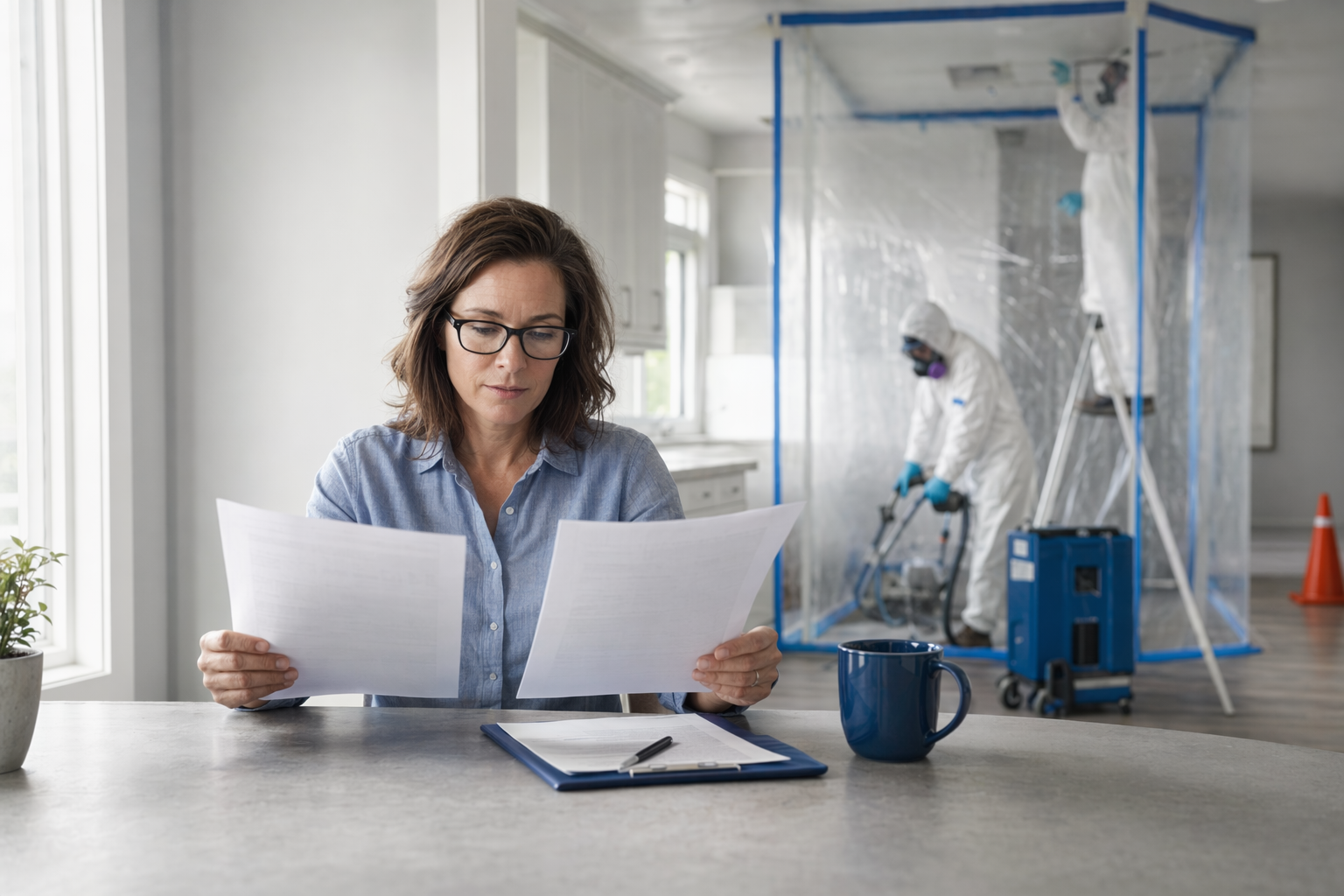
What to do right now if you suspect asbestos
1. Do not disturb suspected material (no scraping, sanding, drilling, demolition, or “just to see”).
2. Keep people away from the area (especially children) and avoid tracking dust to other rooms.
3. Get it tested by a certified asbestos professional (sampling and lab testing). If testing isn’t possible right away, treat it as hazardous and limit access until you can.
4. If someone may have been exposed or you’re worried about health, contact a doctor and/or your local health department for guidance.
Abatewell does not test or remove asbestos. We connect you with licensed, certified pros who can help you test and assess safely.
- If it’s damaged, crumbling, or you’re planning renovations: don’t DIY—pause and get it tested.
- Avoid sweeping/vacuuming if you think it may be asbestos; you can spread fibers.
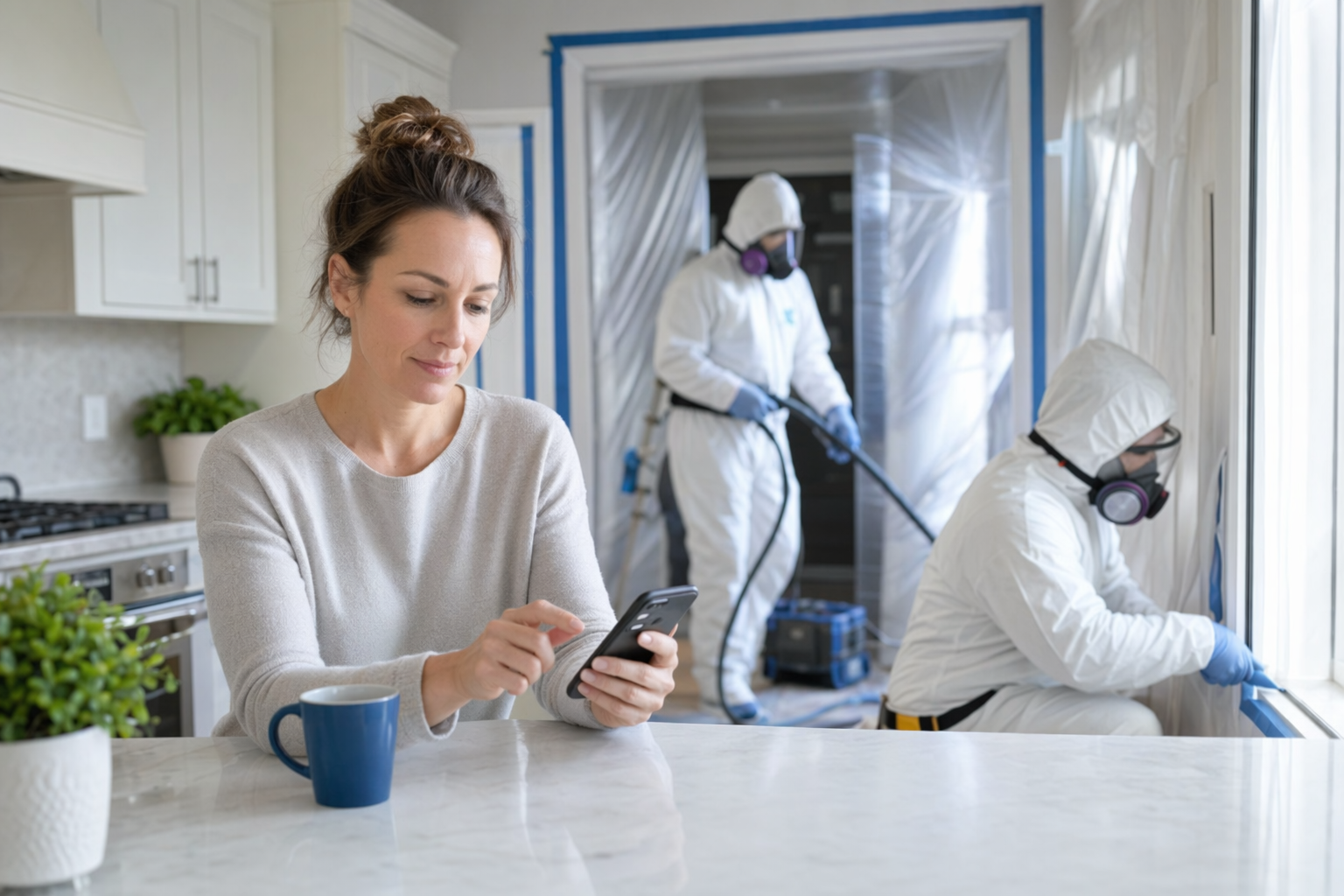
How you can tell it might be asbestos (without disturbing it)
You usually can’t confirm asbestos just by looking. Many asbestos-containing materials (ACM) can look like common building materials—so “appearance clues” should only guide your next step: testing.
Common hints include the home’s age, the type of material, and where it is located. Asbestos was used widely in the past, especially in building materials manufactured before bans became common.
If you’re unsure, treat it as suspected ACM and get professional sampling. Examples of areas people often check (by document review or professional assessment, not DIY sampling) include insulation around pipes/ducts, older floor tile and backing, certain ceiling materials, and some older siding or roofing materials.
If you’re doing renovations or a real-estate sale, suspect materials are often discovered during planning or before demolition. That’s a good time to pause and plan a test-first approach with a qualified pro.
- Age alone doesn’t guarantee asbestos—some homes may not have it, and some newer homes can still contain it in limited cases.
- The goal is not to “identify” the material yourself—it’s to decide when testing is needed.
The safest way to know: professional testing and lab results
The only reliable way to confirm asbestos is accredited lab testing of a properly collected sample. A certified professional will know how to minimize fiber release during sampling.
A typical process looks like this:
1. The asbestos professional reviews your situation (where the material is, its condition, and your planned work).
2. They collect samples using appropriate containment and safety procedures.
3. A lab analyzes the sample and provides results.
4. Based on the results, you’ll get clear recommendations for next steps (for example, encapsulation/repair, or removal handled under the correct rules).
If the sample result is “non-detect” or “no asbestos,” that doesn’t always mean nothing could be present elsewhere. Asbestos can be localized, so sampling strategy matters. Ask the pro what areas should be sampled based on your home and planned work.
- Results should come from an accredited laboratory—ask what lab they use and how results are reported.
- Never rely only on an online image match or “someone said it’s asbestos.”
Rules, certifications, and how to verify a pro is qualified
Asbestos work is heavily regulated, and requirements vary by state and locality. Testing and abatement (removal/containment) must be done by properly licensed/certified professionals in accordance with applicable rules.
When verifying a professional, look for proof of the right authorization for the work they will perform. For example:
- State asbestos licensing/authorization: Ask what license or certification applies in your state and confirm it covers the type of service (testing vs. abatement).
- Proper containment and disposal practices: Licensed pros should explain how they will prevent fiber spread and how waste will be handled.
- Accredited lab workflow: Ask about the sampling method and lab accreditation for asbestos analysis.
- Insurance: Confirm they carry the appropriate insurance for the job.
Even though EPA Lead RRP is about lead paint (not asbestos), it’s a helpful example of how regulated pre-1978 work can be. For asbestos, you must follow your state’s asbestos rules—not lead rules.
How to verify:
- Search your state agency’s website for asbestos licensing/registration verification.
- Ask the pro for their license number and the exact service scope.
- Confirm the license is active and matches your job type and location.
If a company won’t provide license details, pressures you to sign quickly, or describes skipping containment “because it’s fine,” treat that as a red flag.
- Verify certification yourself with your state or local authority—don’t rely on verbal claims.
- For asbestos, “contain and dispose correctly” is not optional.
What asbestos professionals may recommend (and what to expect)
If asbestos is confirmed, the safest approach depends on the material type, condition, location, and whether you plan renovation. Sometimes professionals recommend leaving materials alone if they’re intact and undisturbed; other times they recommend containment or removal.
You might hear terms like encapsulation (sealing the material) or abatement/removal (under strict controls). The right choice is usually about risk management—especially avoiding fiber release during repairs or demolition.
Ask your testing/abatement team these practical questions:
1. What material(s) are suspected and where are they located?
2. What was sampled, and how many samples were collected?
3. What do the results mean for my specific areas and upcoming work?
4. What containment/disposal steps will be used if removal is recommended?
5. How will you prevent contamination of other rooms and airflow pathways?
If you’re buying a home, insist on clear documentation of where asbestos was tested, what the results were, and what work was (or wasn’t) done afterward.
- Your goal is to prevent fiber release—during everyday life and especially during renovations.
- Avoid rushing into removal if materials are intact and professionals advise otherwise—ask for the rationale.
Honest cost ranges and common red flags (so you don’t get scammed)
Costs vary a lot depending on what’s suspected, how accessible the materials are, how many samples are needed, whether containment is required, and what your local disposal/treatment requirements are. Testing is usually much less expensive than full abatement, but the total cost depends on the situation.
Typical ranges (not quotes) you may see:
1. Asbestos testing/sampling with lab results: often in the few-hundred-dollar range, and can be higher if multiple areas are sampled or access is difficult.
2. Abatement/removal (if needed): often in the thousands of dollars, depending on the scope, containment needs, and disposal.
3. Additional work (repairs, re-insulation, floor/ceiling restoration) may add to the total.
Red flags to avoid:
- No license/certification for the work being offered.
- “We’ll just scrape/sand it off” with no containment or dust control.
- Cash-only deals, heavy pressure, or scare tactics.
- Refusal to provide a written scope and written price.
- Vague disposal plans or no explanation of containment.
Before you hire anyone, ask for:
- A written scope of work
- The testing/abatement approach
- License/certification details for your state
- Proof of insurance
- A clear discussion of containment and disposal
Abatewell is free for homeowners. We help you find licensed, certified options—then you verify their credentials and scope directly with them.
- A lowball price can be a sign containment is missing—ask what procedures and controls are included.
- Get everything in writing, including what materials will be tested/removed and where.
To know if your home has asbestos, don’t disturb anything—get it tested by a licensed, certified professional and verify their credentials with your state before any work starts.
Common questions
Can I identify asbestos by how it looks?
Usually, no. Many asbestos-containing materials can resemble non-asbestos materials. The safe, reliable approach is professional sampling and accredited lab testing.
Should I remove or seal suspected asbestos myself?
In most situations, you should not disturb suspected asbestos. Avoid DIY scraping, cutting, sanding, or demolition. A certified professional can test first and recommend the safest next steps.
If asbestos test results come back negative, am I fully in the clear?
Not always. Asbestos can be localized, so a negative result applies to what was sampled. Ask the pro whether additional areas should be tested based on your home and planned work.
How do I verify an asbestos professional is properly licensed?
Ask for their license number and the exact services they’re authorized to provide in your state. Then verify it using your state or local licensing authority’s website or registry.
What if I’m planning renovations or demolition?
Pause and test first. Renovation and demolition can release fibers, so required controls may depend on the material found and local regulations.