Quick answers
How long does asbestos removal take?
Usually, asbestos removal takes anywhere from part of a day to several days, and bigger or more complex jobs can take longer. The safest first step is not to disturb suspected material and to have it tested by a licensed, certified professional first.
What to do right now
If you think a material may contain asbestos, do not sand it, scrape it, drill into it, cut it, or start demolition. Keep children, pets, and other people away from the area as much as you reasonably can until a qualified professional looks at it.
The timeline starts with proper testing, not with tearing material out. A licensed asbestos professional can inspect the material, take samples if appropriate, and send them to an accredited lab. Abatewell is a free matching and directory service — not a contractor, testing lab, or law firm — so we do not test, remove, or abate anything ourselves.
If the concern involves paint in a pre-1978 home, remember that disturbing old paint may also involve lead rules. Renovation that disturbs painted surfaces in pre-1978 housing generally requires an EPA Lead RRP-certified firm and lead-safe work practices.
How long asbestos removal usually takes
The honest answer is: it depends on what the material is, how much there is, where it is, how easy it is to reach, what your state requires, and what containment, air cleaning, clearance, and disposal steps are needed. A small, straightforward job may be completed in part of a day or 1 day. A moderate job often takes 1 to 3 days. Larger, harder-to-access, or multi-room projects can take several days or longer.
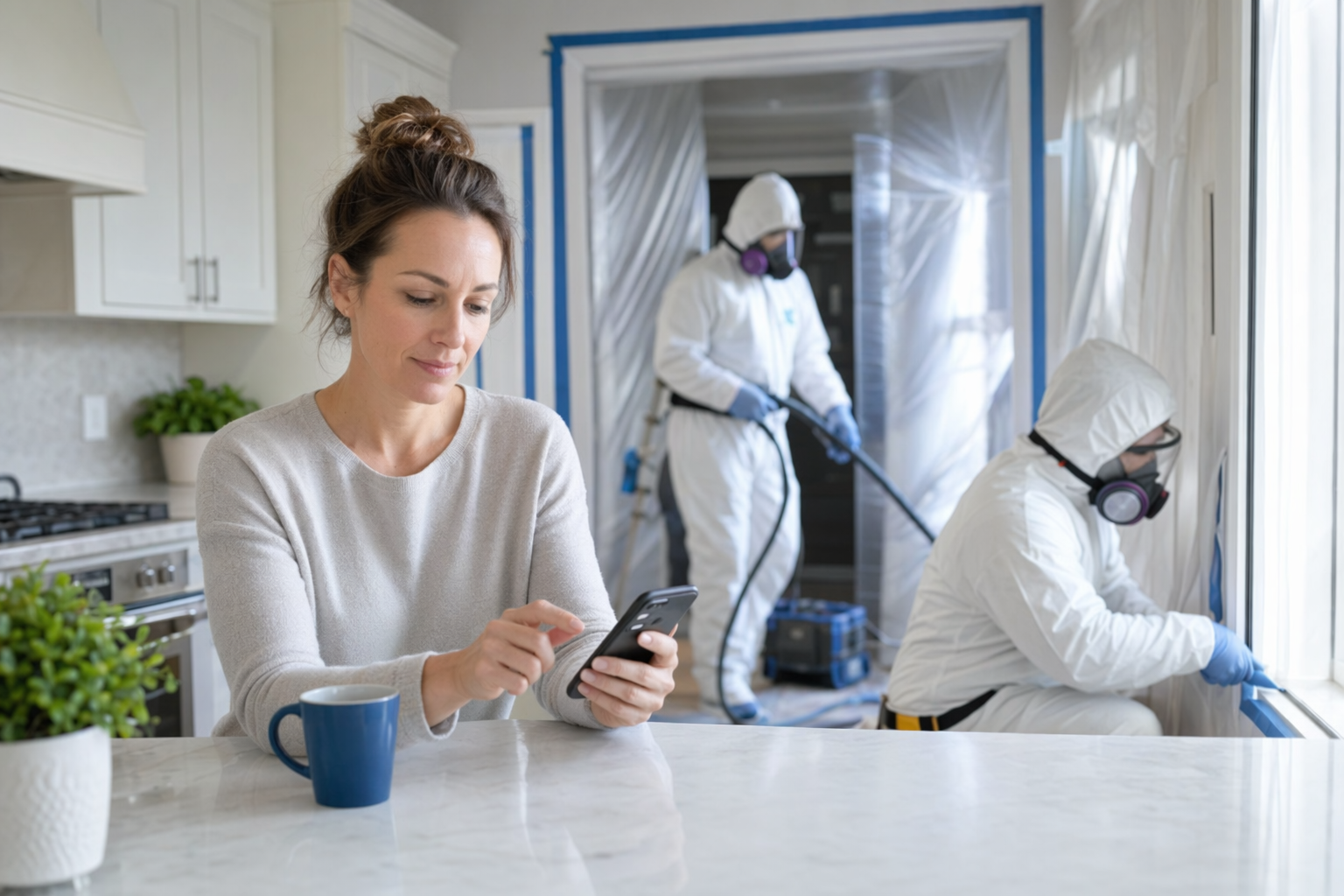
The removal itself is only part of the schedule. Time may also be needed for inspection, lab results, written scope, permits or notifications if required, setting up containment, cleanup, possible air clearance, and transport to an approved disposal facility. If the area is occupied, the contractor may also need extra time to protect the rest of the home.
Common examples: a small amount of pipe insulation or a limited area of damaged material may be a short project, while removing asbestos-containing floor tile and mastic in several rooms, insulation around mechanical systems, or material inside walls or ceilings often takes longer. If the material is friable, damaged, or in a sensitive area, the work may slow down because the safety controls are more strict.
Why the timeline can change
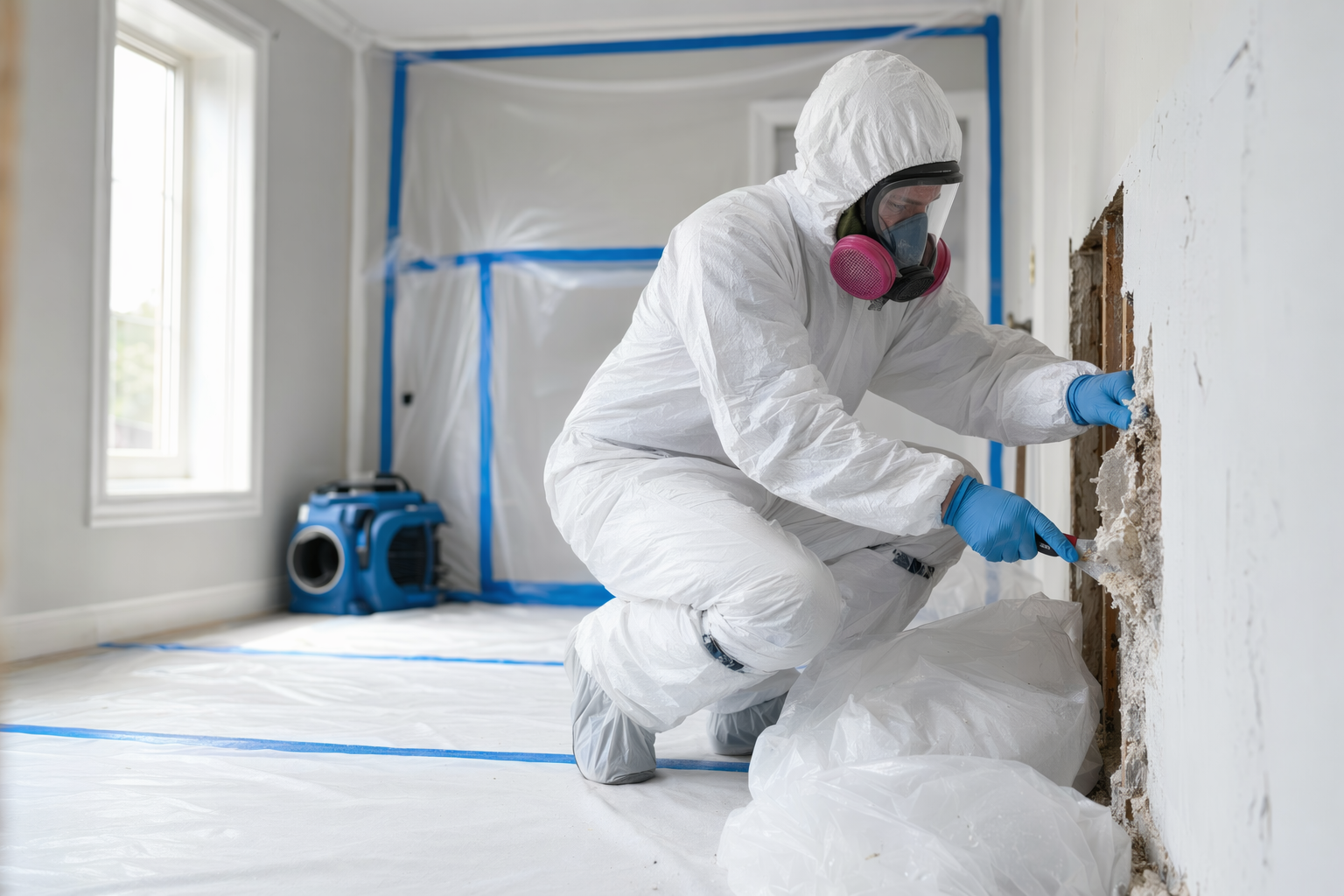
Licensed asbestos work is heavily regulated because the goal is to keep fibers from spreading. A professional may need to build containment with plastic sheeting, use negative air machines, wear protective equipment, follow specific wet methods, and package waste for proper disposal. Those steps are not delays for no reason — they are a big part of doing the job safely.
State asbestos licensing rules vary, and some states or localities require notice periods or specific paperwork before work starts. That means a job that takes one day on site might still take longer from your first call to final completion. If rebuilding or repairs are needed after removal, that is usually a separate step and can add more time.
Weather, building access, occupied units, hidden damage, and surprises behind walls can also affect timing. A careful professional should explain what is known, what is uncertain, and what could extend the schedule.
A simple timeline to expect
- Inspection and sampling: A licensed asbestos professional inspects the suspected material and, if appropriate, collects samples for an accredited lab.
- Results and scope: You get test results, a proposed scope of work, and a plan for containment, cleanup, and disposal.
- Scheduling and notices: The company schedules the job and handles any state or local notice or permit steps required for that type of work.
- Containment setup: The crew isolates the area, protects adjacent spaces, and sets up equipment to control dust and fibers.
- Removal and cleanup: The material is removed using regulated methods, packaged, labeled if required, and cleaned up carefully.
- Clearance and disposal: Depending on the job and local rules, there may be clearance procedures or air testing, then transport to an approved disposal site.
Ask the contractor whether the timeline they give you includes testing, paperwork, containment setup, clearance, and disposal, or only the time their crew will be inside your home. That can prevent confusion.
Cost ranges and why fast is not always better
Small asbestos jobs sometimes fall in the hundreds to low thousands of dollars, while larger or more complex projects can run into the thousands or more. The real number depends on the material, how much there is, where it is, access, your location, required testing, containment, and disposal. These are general ranges, not quotes. You can read more at costs.
Be careful with anyone who promises an unusually cheap price or says they can "just remove it quickly" without containment. A very short timeline is not a good sign if it means skipping regulated safety steps. Proper containment, cleanup, and disposal take time and are part of the job you are paying for.
Get the scope and price in writing. Ask what is included, what could change the price, whether post-removal repair is included, and how disposal is handled. A careful company should be able to explain the process in plain language.
How to find and verify a qualified asbestos pro
Look for a company that is properly licensed for asbestos work in your state, carries insurance, and can explain its containment and disposal procedures clearly. If your project may also disturb paint in a pre-1978 home, ask whether an EPA Lead RRP-certified firm is needed for that part of the work.
Do not rely only on a website or a business card. Verify the company's asbestos license or certification yourself through your state licensing or environmental agency, and verify any EPA Lead RRP certification directly as appropriate. Ask who will do the testing, whether the lab is accredited, and whether the workers assigned to your job hold the required credentials.
Red flags include: no license or certification, no containment plan, "we'll just scrape or sand it off," cash-only demands, scare tactics, pressure to sign immediately, or vague answers about disposal. If you need help starting your search, Abatewell can help you get matched with licensed, certified lead or asbestos professionals near you. The service is free for homeowners and renters, and we only collect basic contact and project details such as name, phone, optional email, concern type, ZIP code, rough home age, and preferred language.
For more plain-language help, see our answers and guides. This page is general educational information only, not legal, regulatory, or medical advice.

Asbestos removal can take from part of a day to several days or more, but the safest path is always: do not disturb it, get it tested first, and use a properly licensed professional.
Common questions
Can asbestos removal be done in one day?
Sometimes, yes — but usually only for a small, simple job. Many projects take longer once you include testing, containment, cleanup, and proper disposal.
Do I have to leave my home during asbestos removal?
Sometimes you may, and sometimes the work area can be isolated while you stay elsewhere in the home. That depends on the material, the location, the containment plan, and your contractor's safety procedures.
What delays asbestos removal the most?
Testing, required notice or permit steps, containment setup, difficult access, hidden damage, and clearance or disposal requirements can all add time. A careful contractor should explain these possible delays before work starts.
How do I know the company is really qualified?
Verify its asbestos license or certification yourself with your state agency, ask for proof of insurance, and ask how containment and disposal will be handled. If lead paint may also be disturbed in a pre-1978 home, verify EPA Lead RRP certification too.
Should I remove suspected asbestos myself to save time?
No. The safest step is not to disturb suspected asbestos and to have it tested first by a qualified professional, because disturbing it can release hazardous fibers.